The sights
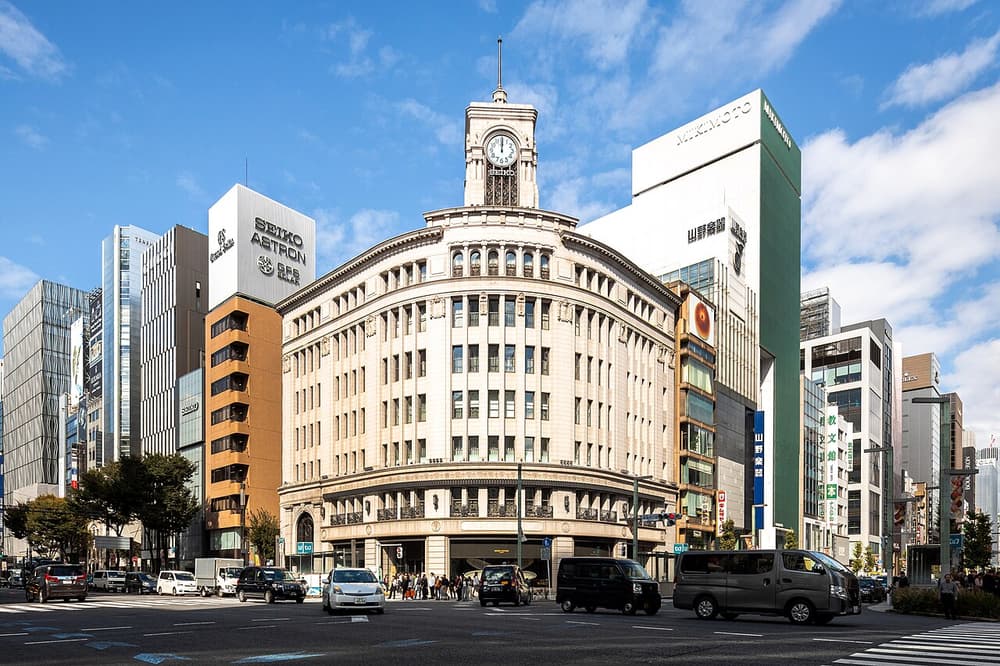
Ginza 4-chome & Chuo-dori
The crossing watched over by the Wako clock tower is the centre of Ginza. Chuo-dori, the main street, is lined with department stores (Mitsukoshi, Matsuya), Ginza Six, flagship boutiques and specialists such as the Itoya stationery store.
ℹ️ Shops open roughly 10:30–20:00. Chuo-dori becomes a pedestrian zone on weekend and holiday afternoons. Free. Allow 1.5–2 hours.
Tokyo Station & Marunouchi
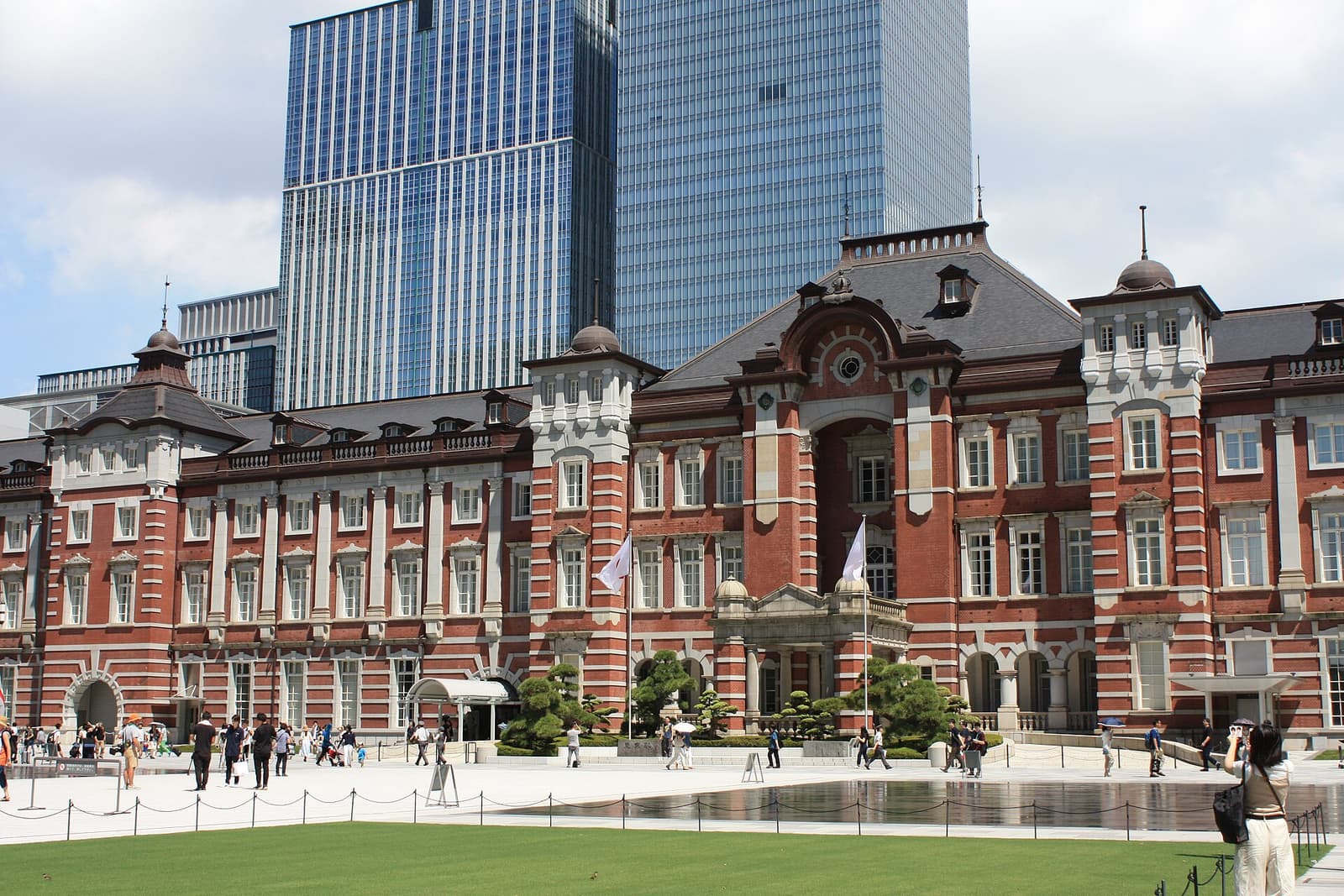
The long red-brick station building of 1914, restored to its original domed form in 2012, faces a plaza and an avenue leading to the palace. Underground are Character Street and Ramen Street; above, the KITTE building has a free roof garden overlooking the tracks.
ℹ️ Free. The Marunouchi side is the historic façade; the Yaesu side has the bus terminal. Beautifully lit after dark. Allow 45 minutes.
Imperial Palace & Nijubashi
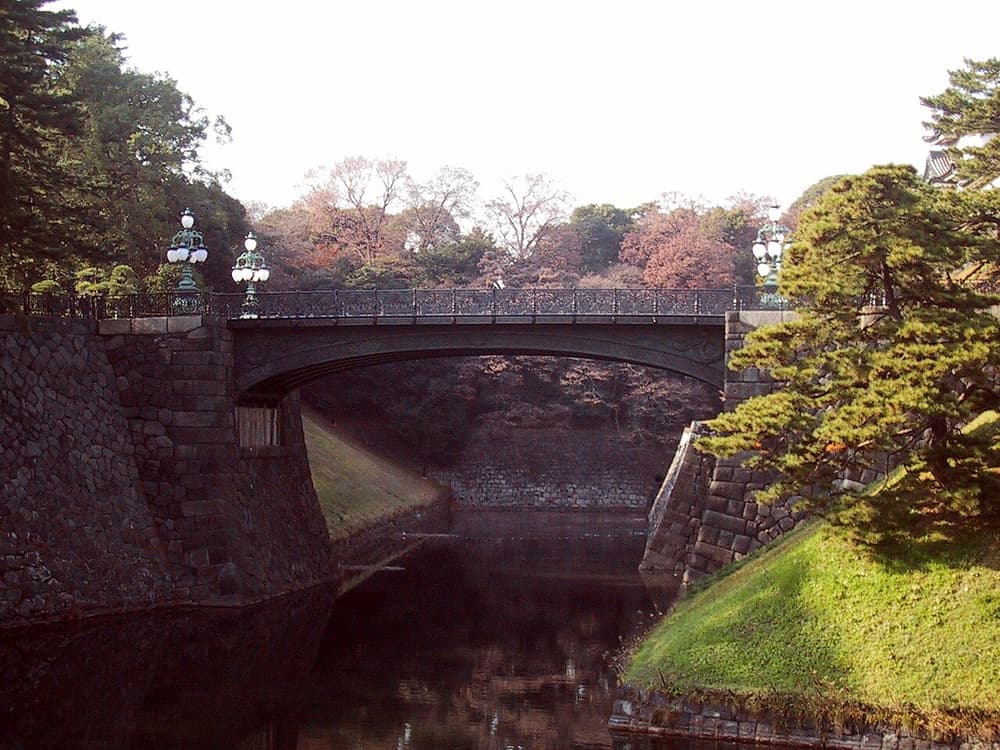
The residence of the emperor stands behind moats and massive stone walls. The classic view is of the double-arched Nijubashi bridge from the gravel plaza; the inner grounds can only be visited on guided tours or on special opening days.
ℹ️ The outer plaza is always open and free. Free guided tours of the inner grounds run on certain days with advance or same-day registration. 10–15 minutes’ walk from Tokyo Station. Allow 45 minutes.
Imperial Palace East Gardens
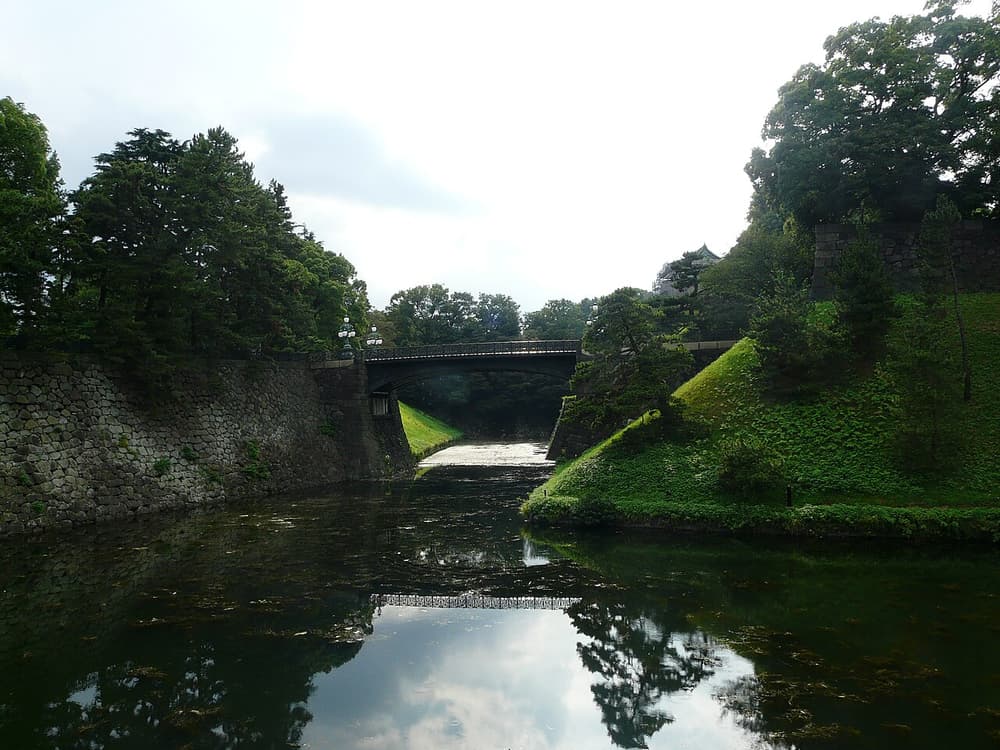
The public part of the palace: lawns, a Japanese garden and the stone base of the vanished castle keep, inside the gates of old Edo Castle.
ℹ️ Free. Usually open from 9:00 to late afternoon; closed Mondays and Fridays and over New Year. Enter by Otemon Gate. Allow 1–1.5 hours.
Tsukiji Outer Market
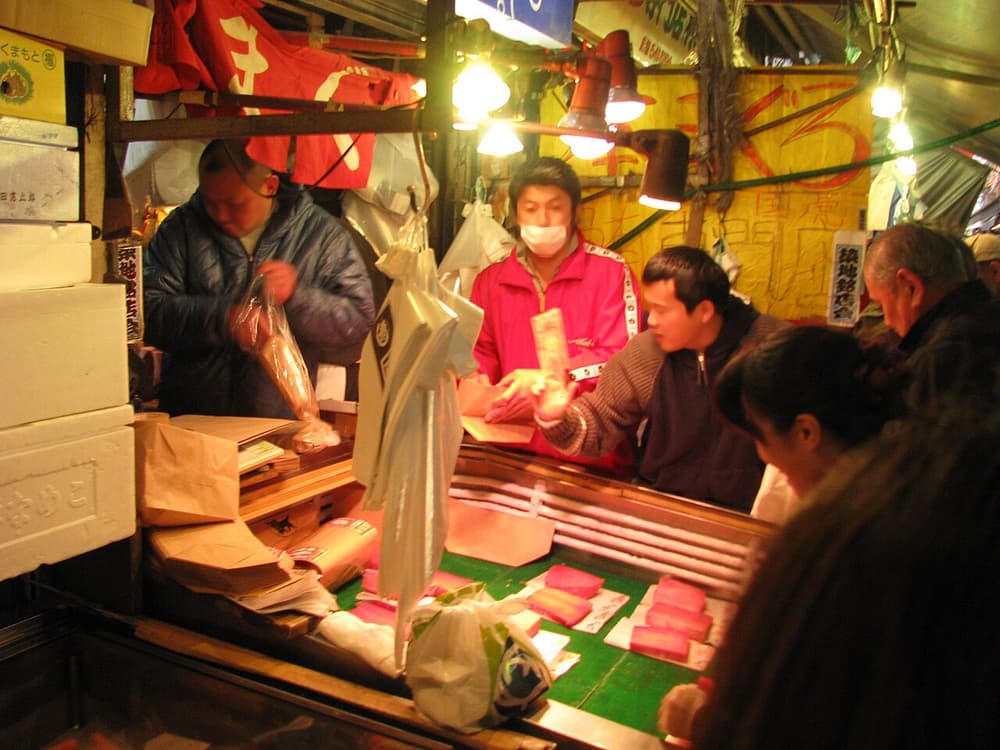
Several blocks of narrow lanes with some 400 shops and stalls selling seafood, knives, dried goods and ready-to-eat snacks — grilled scallops, sea urchin, sweet rolled omelette. The wholesale auctions moved to Toyosu in 2018, but this is still where Tokyo comes to shop for food.
ℹ️ Best from about 8:00 to 12:00; many shops close by 14:00 and on Sundays and some Wednesdays. Free to enter; bring cash. Allow 1.5 hours.
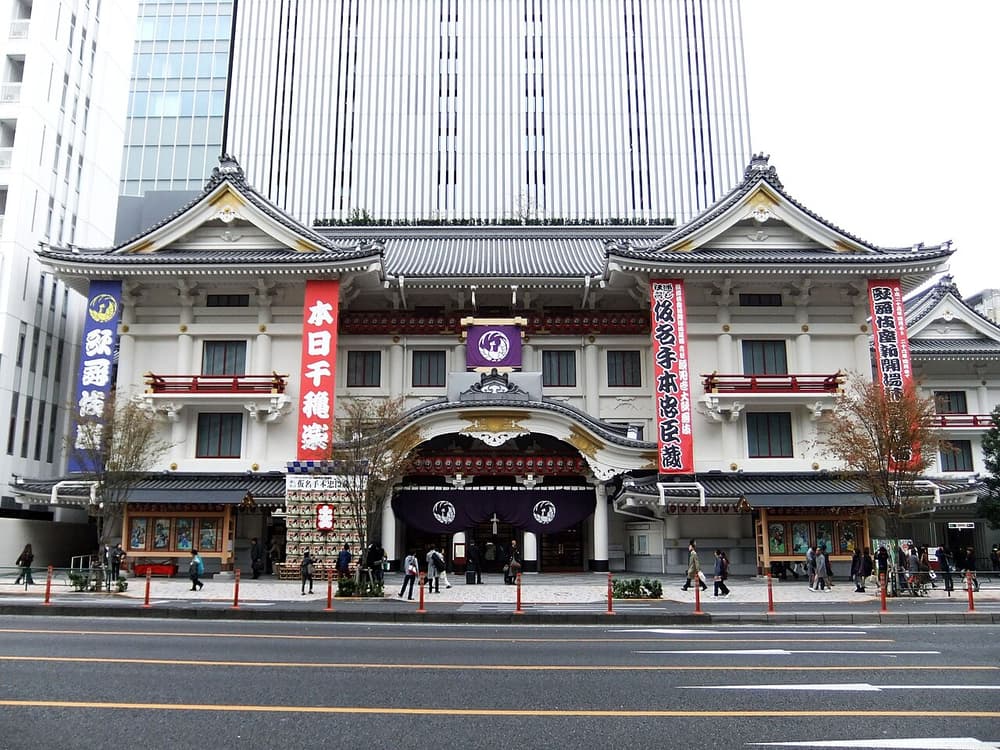
Kabuki-za
The home of kabuki in Tokyo, rebuilt in 2013 in a traditional style beneath an office tower. Programmes run most of the month, usually in two or three parts a day; there is a small gallery and souvenir floor for those not seeing a show.
ℹ️ Full-programme and single-act tickets are sold; arrangements change, so check the theatre’s current information. Directly above Higashi-Ginza Station.