- The short answer
- Tokyo month by month
- Cherry-blossom season (sakura)
- Rainy season, summer heat and typhoons
- Autumn leaves (koyo)
- Holidays to plan around
- Sumo, baseball and the festival calendar
The short answer
The best times to visit Tokyo are late March to May and October to early December, when days are mild and the city is at its most beautiful. The cherry blossom of late March and early April and the autumn colours of late November are the two peaks — and bring the highest prices and thickest crowds.
Winter (December to February) is cold but sunny and dry, with thin crowds, low hotel rates outside New Year and the clearest views of Mount Fuji. Summer (June to September) is hot, humid and wet, redeemed by fireworks, street festivals and the Fuji climbing season. There is no bad time: Tokyo’s food, museums, shopping and nightlife do not depend on the weather.
Tokyo month by month
Temperatures are long-term averages for central Tokyo, rounded; individual years vary.
| Month | Avg high / low | Weather | What’s on | Crowds |
|---|---|---|---|---|
| January | 10°C / 1°C | Cold, dry, sunny | New Year shrine visits, sales, sumo tournament | Quiet after the first week |
| February | 11°C / 2°C | Cold, dry; plum blossom | Setsubun bean-throwing, plum festivals | Quiet |
| March | 14°C / 5°C | Turning mild; some rain | Cherry blossom from late March, Tokyo Marathon | Very busy from the last week |
| April | 19°C / 10°C | Mild and pleasant | Cherry blossom into early April, azaleas, Golden Week from 29 April | Very busy |
| May | 24°C / 15°C | Warm, clear | Golden Week to 5 May, Sanja Matsuri, sumo tournament | Very busy early, then moderate |
| June | 26°C / 19°C | Rainy season, humid | Hydrangeas, irises, Sanno Matsuri (even years) | Moderate |
| July | 30°C / 22°C | Rain ends mid-month, then hot | Fireworks, Fuji climbing season opens, lotus | Moderate; busy at festivals |
| August | 31°C / 24°C | Hot, humid; typhoons possible | Obon holidays, fireworks, Awa Odori dances | Busy mid-month |
| September | 28°C / 20°C | Warm; peak typhoon risk | Sumo tournament, late-summer festivals | Moderate |
| October | 22°C / 15°C | Mild, increasingly clear | Autumn colour in Nikko, Halloween events | Busy |
| November | 17°C / 9°C | Cool, dry, bright | Ginkgo and maple colour from late month, Tori-no-Ichi fairs | Very busy late month |
| December | 12°C / 4°C | Cold, dry, sunny | Illuminations, year-end markets, New Year’s Eve bells | Moderate; busy at year end |
Each destination guide has its own table and local events — for example Mount Fuji, where visibility matters more than temperature, and Nikko, where autumn arrives a month earlier than in Tokyo.
Cherry-blossom season (sakura)
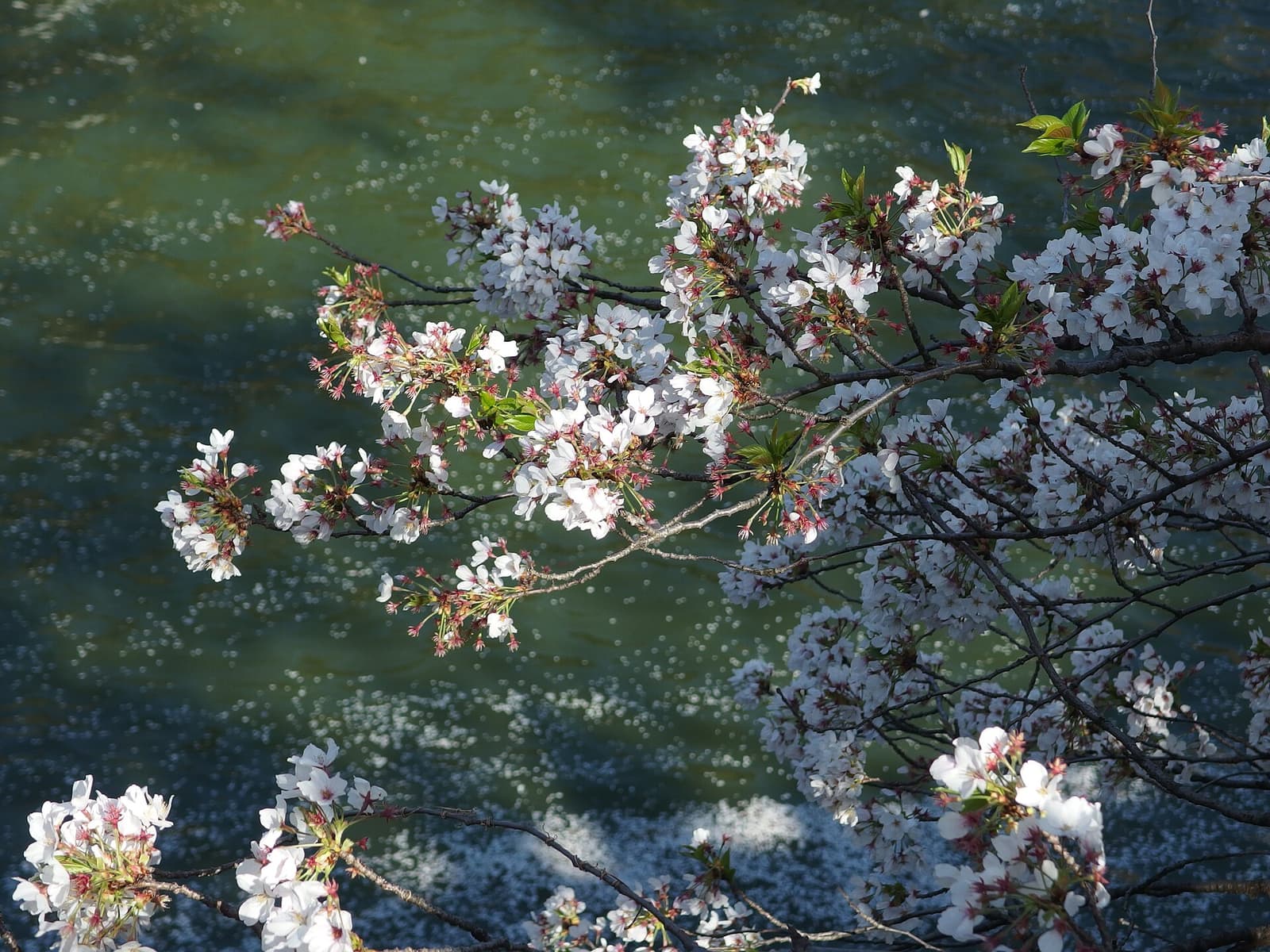
In Tokyo the most common cherry variety usually opens in the last week of March and reaches full bloom about a week later, lasting until the first week of April if wind and rain are kind. Timing moves by a week or more from year to year; forecasts are published from January and updated often. Early and late varieties extend the season at Shinjuku Gyoen.
Where to go: Ueno Park for the party atmosphere, Chidorigafuchi and the Imperial Palace moats for rowing boats under the branches, Shinjuku Gyoen for space and variety, Sumida Park for blossom with Skytree, the Meguro River for a tunnel of trees, and Yoyogi Park for picnics. Around Tokyo, blossom reaches Kamakura at the same time, Lake Kawaguchiko in mid-April and Nikko in mid-to-late April.
How to cope: book flights and hotels months ahead, visit famous spots early in the morning or on weekdays, and reserve timed-ticket attractions well in advance.
Rainy season, summer heat and typhoons
The rainy season (tsuyu) typically runs from early June to mid-July. It rarely rains all day, every day — expect grey skies, showers and high humidity — and hydrangeas are at their best. Prices are lower and sights quieter.
From mid-July to early September Tokyo is hot and very humid, with highs commonly above 30°C and many days above 35°C in recent years. Plan outdoor sightseeing for early morning and evening. Typhoons are most likely from August to October, peaking in September; a direct hit is unusual but can suspend trains and flights for a day, so keep your plans flexible and have insurance.
Autumn leaves (koyo)
Autumn colour comes down from the mountains: early to mid-October at Lake Chuzenji above Nikko, late October to early November at Nikko’s shrines and Lake Kawaguchiko, November in Hakone, and late November to early December in central Tokyo and Kamakura.
In the city, the best-known sights are the ginkgo avenue of Meiji Jingu Gaien, the gardens of Rikugien and Koishikawa Korakuen (often lit up at night), Shinjuku Gyoen and the Imperial Palace East Gardens. The weather is settled and comfortable, which makes late November arguably the best single moment of the year to visit.
Holidays to plan around
- New Year (about 29 December to 3 January): many museums, restaurants and shops close for several days, while shrines and temples are packed for the first prayers of the year. Trains run through the night on 31 December on some lines.
- Golden Week (29 April to 5 May): a run of public holidays when all of Japan travels. Hotels, trains and day-trip destinations are at their busiest.
- Obon (around 13–16 August): another domestic travel peak, though central Tokyo itself can feel emptier.
- Silver Week (around 20 September): a cluster of holidays that in some years creates a long weekend.
Sumo, baseball and the festival calendar
Sumo. Three of the six annual grand tournaments are held in Tokyo, at the Ryogoku Kokugikan, in January, May and September. Each lasts 15 days, usually starting on the second Sunday of the month. Tickets go on sale about a month ahead and sell quickly; at other times, morning practice visits and sumo shows fill the gap — see tours and tickets.
Baseball. The professional season runs from late March to October. Tokyo’s two central teams are the Yomiuri Giants at Tokyo Dome and the Yakult Swallows at the open-air Meiji Jingu Stadium; the organised chanting of the fans is a spectacle even if you do not follow the sport.
Festivals. The year’s landmarks:
| When | Event | Where |
|---|---|---|
| 1–3 January | Hatsumode, the first shrine visit of the year | Meiji Jingu, Senso-ji and every shrine |
| Early March | Tokyo Marathon | Shinjuku to Tokyo Station |
| Late March–early April | Cherry-blossom festivals | Ueno, Chidorigafuchi, Sumida Park, Meguro River |
| Mid-May (odd years) | Kanda Matsuri | Kanda Myojin |
| Third weekend of May | Sanja Matsuri | Asakusa |
| Mid-June (even years) | Sanno Matsuri | Hie Shrine and central Tokyo |
| Last Saturday of July | Sumida River Fireworks | Asakusa and the Sumida River |
| Late August | Koenji Awa Odori dance festival | Koenji, west of Shinjuku |
| November | Tori-no-Ichi good-luck fairs | Otori Shrine (Asakusa), Hanazono Shrine (Shinjuku) |
| November–February | Winter illuminations | Marunouchi, Roppongi, Shibuya, Omotesando |
| 31 December | Joya-no-kane, New Year’s Eve bell-ringing | Zojo-ji, Senso-ji and other temples |
Dates of fireworks and some festivals shift from year to year or are occasionally cancelled; confirm locally before planning a day around them.