Areas at a glance
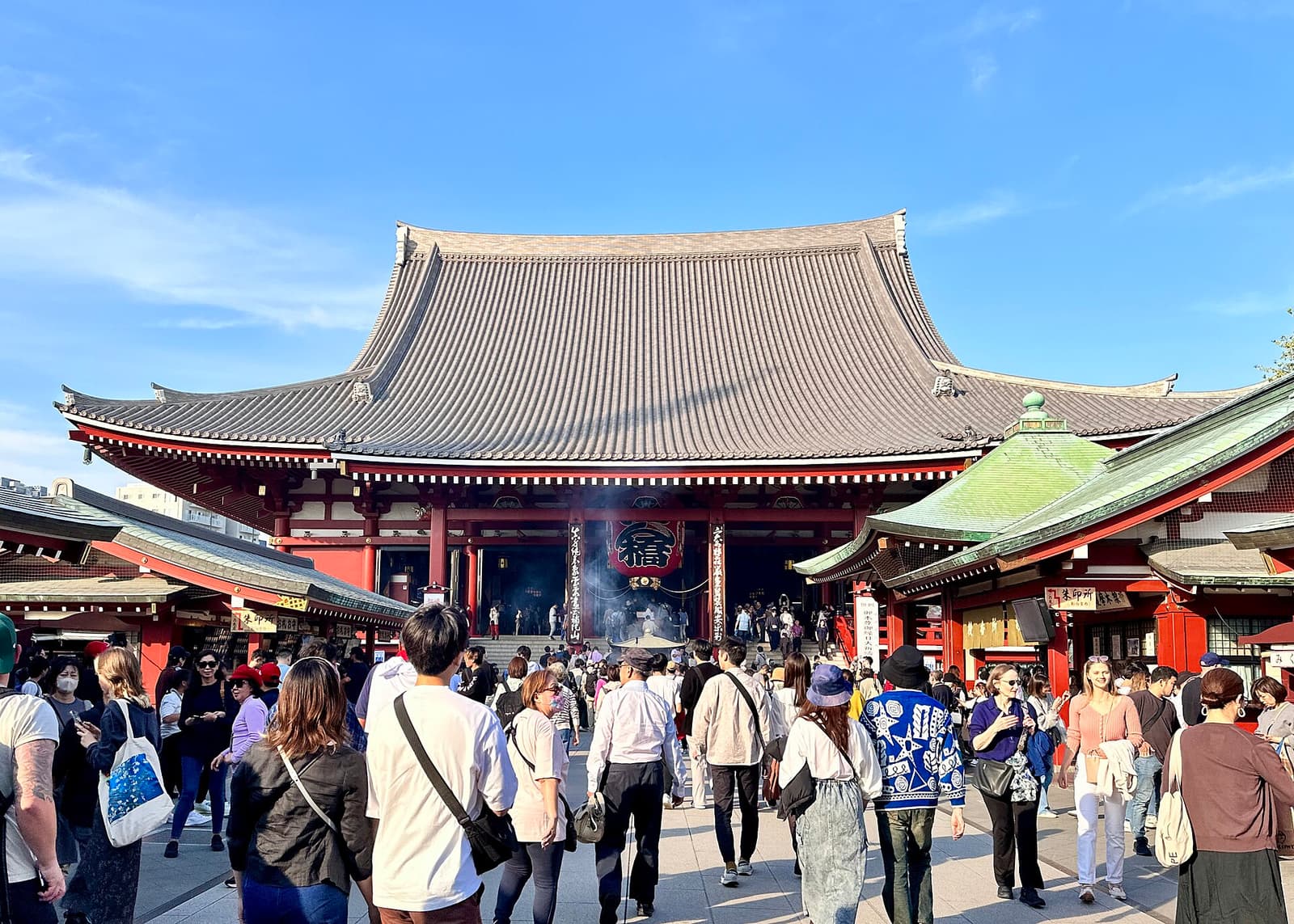
- Senso-ji and Nakamise: the sights, busiest from mid-morning.
- Denboin-dori and the arcades: craft shops, tempura and soba restaurants.
- Hoppy Street: open-fronted izakaya serving stew and cheap drinks from the afternoon.
- Kappabashi: a kilometre of kitchenware shops — knives, ceramics, plastic food samples.
- Oshiage and Skytree Town: modern shopping and views across the river.
Eating and drinking
Asakusa is known for tempura on rice, eel, soba and old-fashioned sweets such as ningyo-yaki cakes and melon-pan bread. Lunch at a long-established restaurant typically costs around ¥1,500–3,000; street snacks a few hundred yen each.
Temple etiquette
Waft the incense smoke over yourself for luck, rinse your hands at the water basin, throw a coin in the offering box, bow and pray quietly. Fortune slips (omikuji) cost about ¥100; tie a bad one to the rack and leave it behind. Photography is fine in the grounds but not of the inner altar.
Money-saving ideas
- The temple, the gate and the rooftop view from the Asakusa Culture Tourist Information Centre are free.
- A Tokyo Subway Ticket covers the Ginza and Asakusa lines.
Sample plans
Half a day
Senso-ji before 9:00, Nakamise as the stalls open, lunch on Denboin-dori, then Kappabashi or a rickshaw ride.
One full day
The morning as above in kimono, a water bus or the walk across to Skytree in the afternoon, the decks at sunset and dinner on Hoppy Street.
Evening only
The temple illuminated after dark, almost empty, followed by a yakatabune dinner cruise or drinks under the lanterns of Hoppy Street.