Areas at a glance
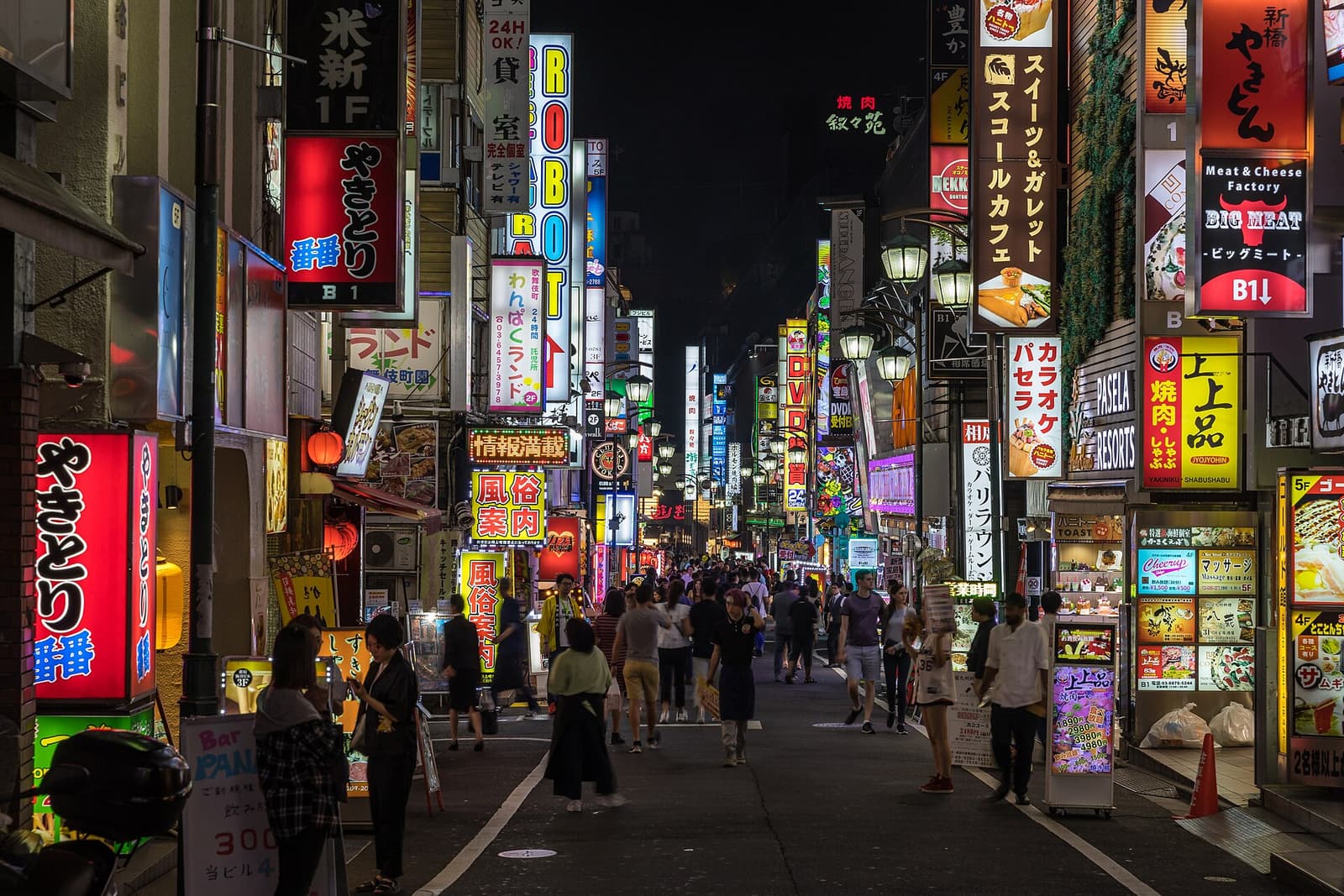
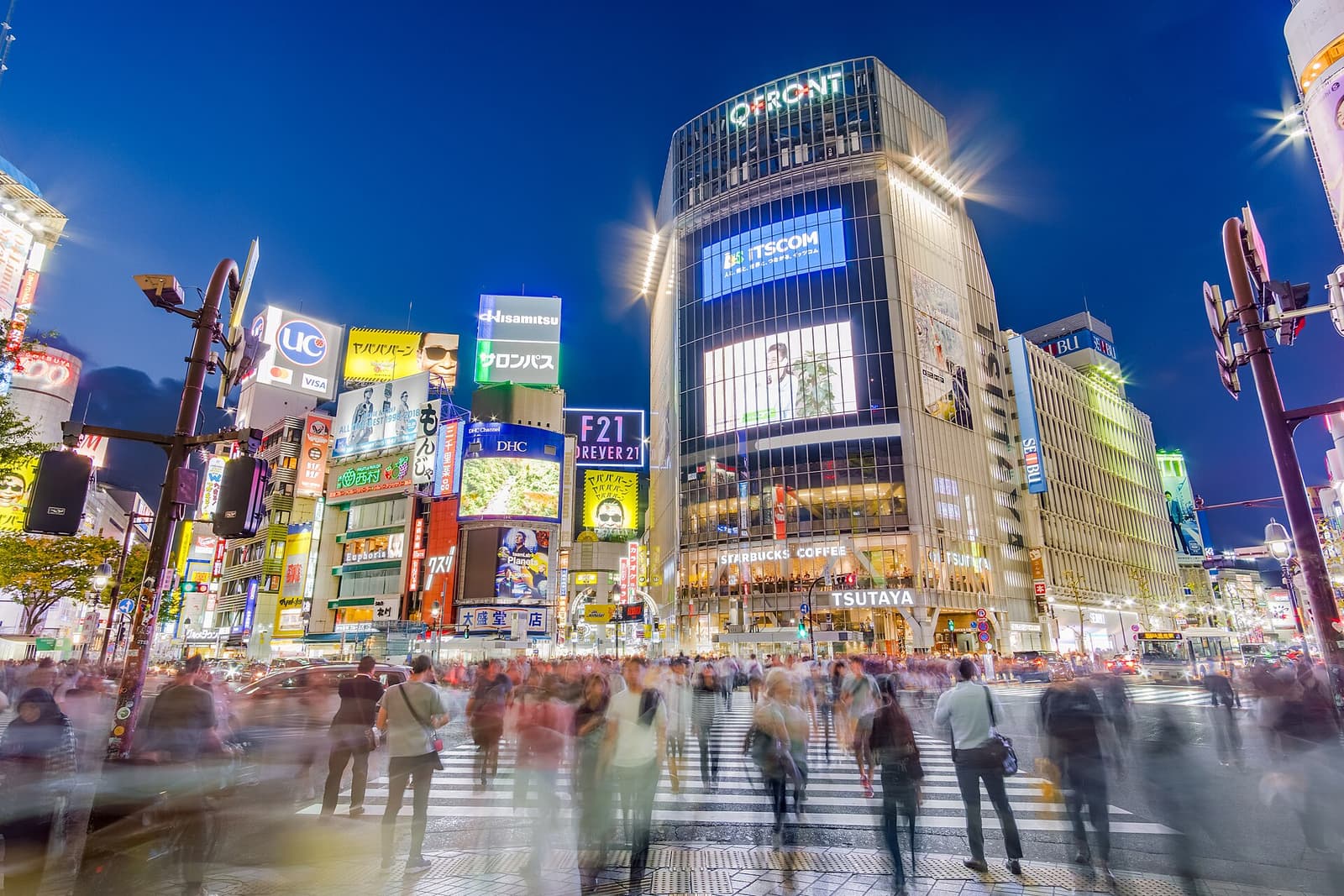
- Around the crossing and Center Gai: chain restaurants, karaoke, arcades, fast fashion.
- Dogenzaka and Maruyamacho: clubs, live houses and late bars up the hill.
- Miyashita Park and Shibuya Yokocho: a rooftop park over a shopping mall, with a lane of regional izakaya at street level.
- Harajuku and Ura-Harajuku: teenage fashion on Takeshita Street, streetwear and vintage in the lanes behind.
- Omotesando and Aoyama: grown-up shopping, galleries and good coffee.
- Yoyogi Park: picnics, buskers and weekend events next to the shrine.
Eating and drinking
Department-store food floors in Shibuya Scramble Square, Hikarie and Tokyu Food Show are the quickest way to eat well. For atmosphere try the tiny bars of Nonbei Yokocho beside the tracks, or the food stalls of Shibuya Yokocho. Harajuku is the place for crêpes and sweet snacks; Omotesando and Aoyama for cafés and lunch sets.
Money-saving ideas
- Several buildings around the crossing offer free or low-cost views if Shibuya Sky is sold out or over budget.
- Meiji Jingu, Yoyogi Park and window-shopping on Omotesando cost nothing.
- Tax-free shopping is widely available — see the Tokyo travel guide for how the rules are changing.
Etiquette and safety
At Meiji Jingu, bow once at each torii, walk at the side of the path and rinse your hands at the water basin before approaching the main hall. In Shibuya, drinking in the street is restricted at night around the station, and the ward actively discourages Halloween and New Year gatherings at the crossing. The area is safe, but late at night ignore touts on Center Gai and Dogenzaka.
Sample plans
Half a day
Meiji Jingu at opening time, Takeshita Street before the crowds, a walk down Omotesando and Cat Street, and the crossing to finish.
One full day
The half-day route, then lunch in Omotesando, shopping or a ramen class in the afternoon, Shibuya Sky at sunset and dinner in Shibuya Yokocho or Nonbei Yokocho.
With children
Yoyogi Park and the shrine forest in the morning, crêpes in Harajuku, then the crossing and the Shibuya Sky rooftop in the late afternoon.